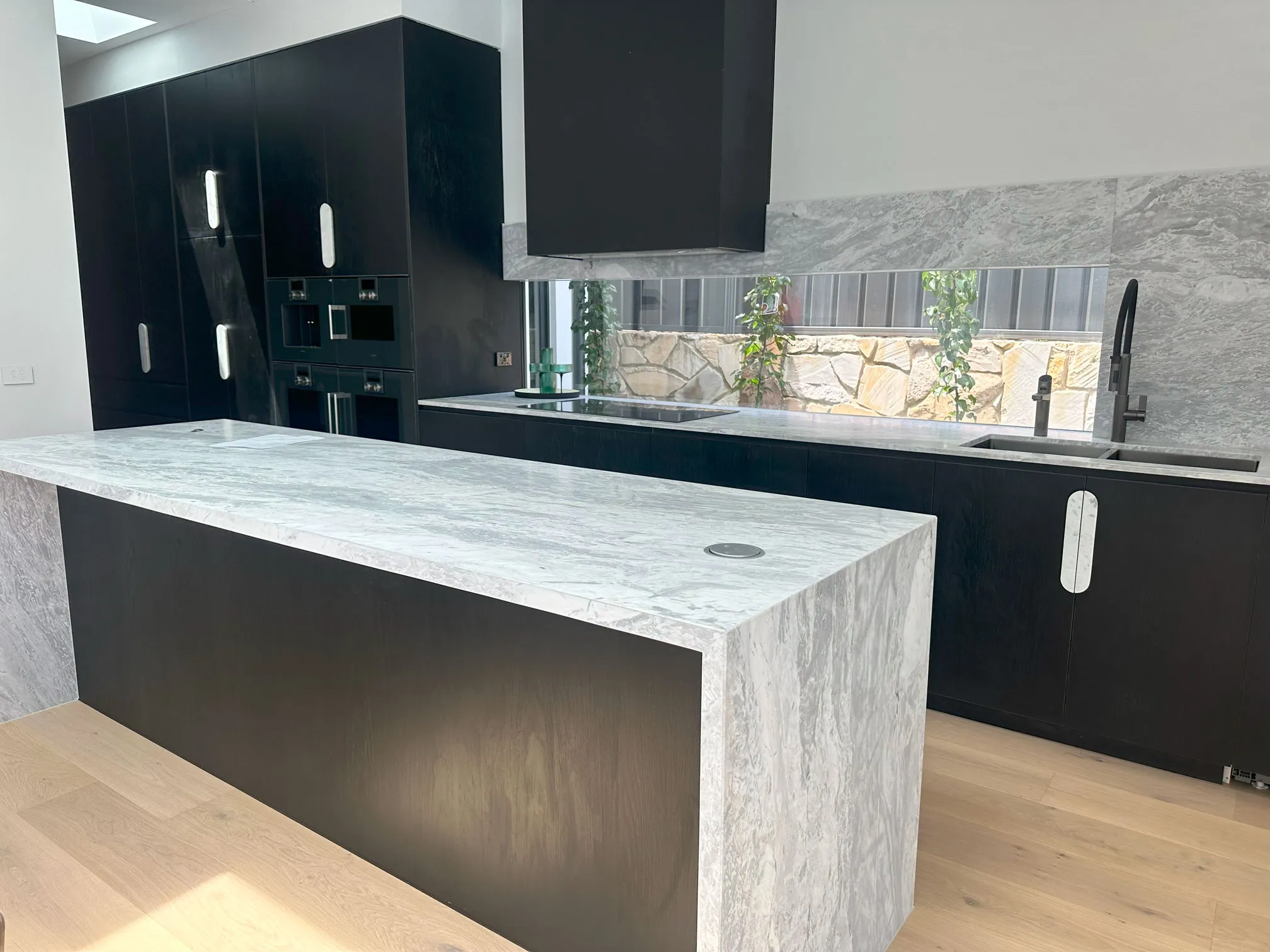
Choosing the right cabinet finish is one of the most important decisions in any kitchen renovation. The finish affects the overall appearance of the space and how well the cabinetry stands up to daily use, moisture, cleaning and general wear. Whether you are planning premium custom cabinetry or looking for a practical solution that balances style and budget, understanding the differences between painted, vinyl, laminate and timber finishes can help you make a more confident decision.
For homeowners considering kitchen renovations in Canberra, selecting a cabinet finish that suits your lifestyle, design goals and maintenance expectations is essential. Before planning any major changes, homeowners can also review ACT Planning’s guidance on building or renovating your home, as some renovation work may involve approvals, compliance requirements or professional advice. At Caliber Kitchens, clients are often guided through the strengths and limitations of each option to ensure the finished kitchen delivers the right combination of durability, functionality and visual appeal.
What Should You Consider Before Choosing a Cabinet Finish?
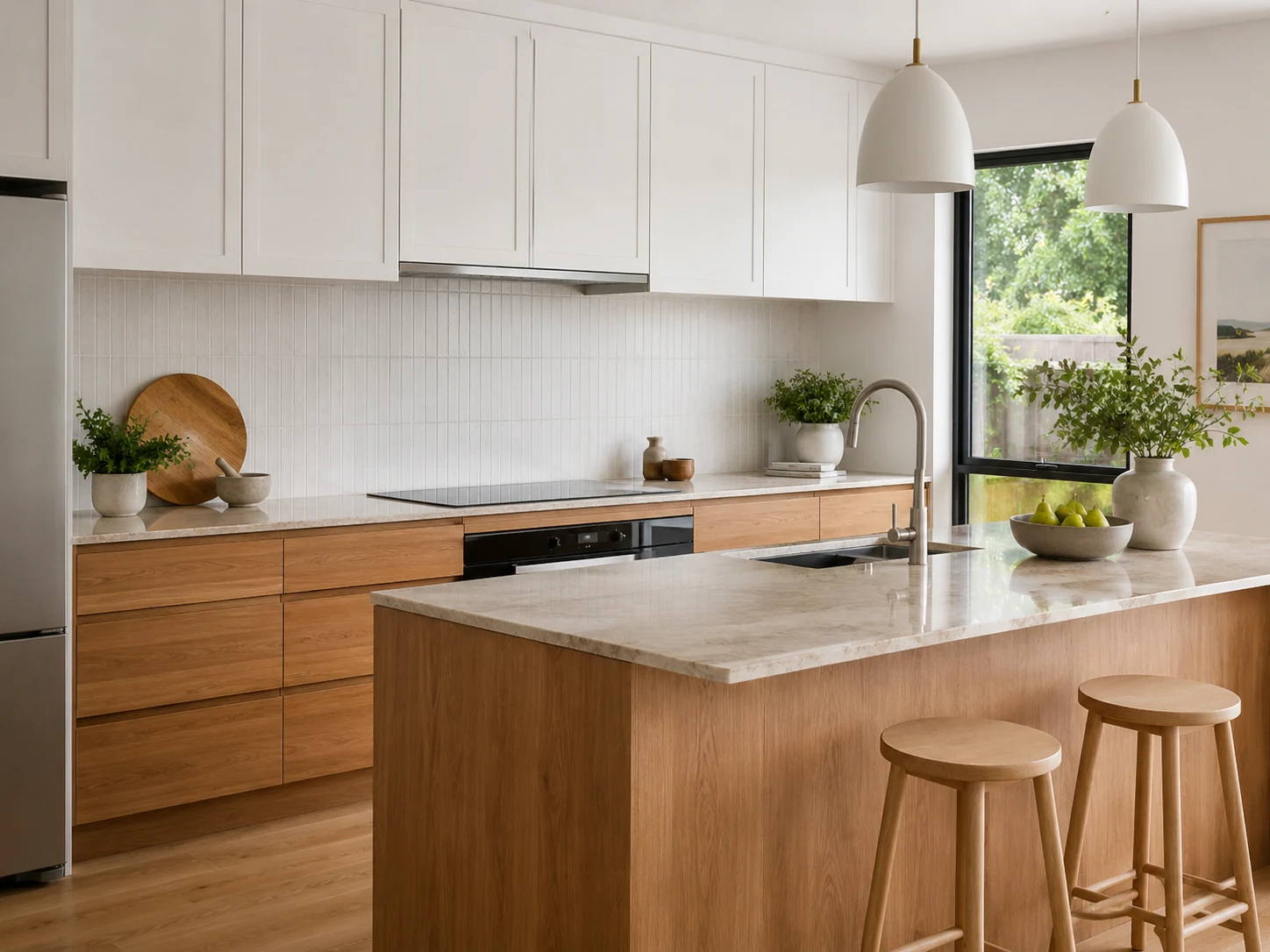
The right cabinet finish should suit daily life as much as it suits design preferences. Before deciding between painted, vinyl, laminate or timber cabinets, weigh up how the kitchen is used, how much maintenance is acceptable and what budget is available.
The finish choice also affects how the kitchen will age. Some surfaces hide wear and fingerprints more effectively, while others look premium but need more care. Thinking through these trade-offs at the start helps avoid disappointment once the kitchen is installed and in regular use.
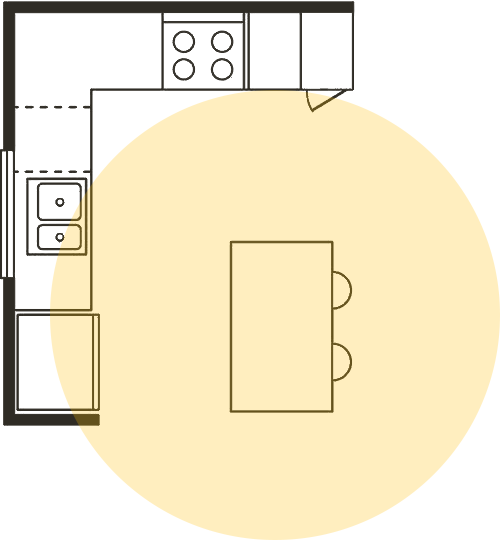
Cabinet finishes are only one part of the planning process, so it is also worth reviewing the top considerations for your kitchen renovation before finalising materials, layout and design details.
Lifestyle, Use and Durability
Households that cook frequently or have young children or pets need finishes that can handle moisture, heat and knocks without constant touch-ups. High-traffic kitchens often benefit from durable options, such as quality laminate or properly sealed timber. These can resist everyday wear better than some painted finishes or lower-grade vinyl finishes that may chip, peel or lift around handles, corners and appliance zones.
Consider how carefully the kitchen is likely to be used. If doors are often bumped, drawers are closed firmly or bags and school items are regularly placed on benchtops, a harder-wearing surface may be the safer choice. Gloss finishes also tend to show scratches, swirls and fingerprints more than matt or textured options. If hiding marks is a priority, a subtle sheen or textured finish is usually more forgiving.
Moisture levels matter as well. A water-resistant finish is essential to reduce the risk of swelling, lifting or deterioration around sinks, dishwashers, kettles and bins. Any timber or painted surface in these zones should have a high-quality seal and careful detailing to protect exposed edges and joints.
Budget and Maintenance
Different finishes sit at different price points, not only at installation but across the life of the kitchen. Laminates and some vinyl products can offer a lower upfront cost with good durability if selected from reputable ranges. High-quality 2-pack painted finishes, solid timber and timber veneer usually sit higher on the price scale, but some can be repaired, refinished or refreshed rather than fully replaced. The Australian Government’s YourHome guidance on the selection of materials also notes that material choices can affect durability, performance, cost effectiveness and lifecycle impact.
Finish selection can also affect ordering, manufacturing and installation timeframes, so it may be useful to understand how long a kitchen renovation takes before finalising materials.
Maintenance expectations should be realistic. Painted cabinetry may need occasional touch-ups on high-use edges. Vinyl can be easy to wipe clean, but it is difficult to repair neatly if it starts to peel, bubble or delaminate. Laminate usually requires only mild cleaning products and resists staining well. Timber needs gentle cleaners and periodic attention to its protective coating to keep moisture protection intact.
Style, Light and Existing Surfaces
Cabinet finish has a major impact on how large, bright or warm a kitchen feels. Lighter painted or laminated doors reflect more light, which can help open up compact spaces or darker rooms. Rich timber tones or deep colours create warmth and depth, but they can visually shrink a small kitchen if they are not balanced with lighter benchtops, splashbacks or flooring.
Existing flooring and benchtops should also guide the decision. Timber cabinets near timber flooring need careful coordination of tones, so the space feels intentional rather than mismatched. Highly patterned stone or engineered benchtops often pair best with simpler cabinet finishes, whether that is a flat paint colour, a soft timber grain or a plain laminate.
Before locking in colours, sheen levels and door profiles, it is worth reviewing the kitchen design as a whole so the cabinets, benchtops, splashback and flooring work together.
Surface sheen is another design factor. High-gloss finishes bounce light and can create a sleek look, but they also highlight fingerprints and minor imperfections. Matt and satin finishes create a softer contemporary appearance and usually hide everyday smudges more effectively, which can be useful in busy family kitchens.
Painted Kitchen Cabinets: Flexible Colours and a Smooth Finish
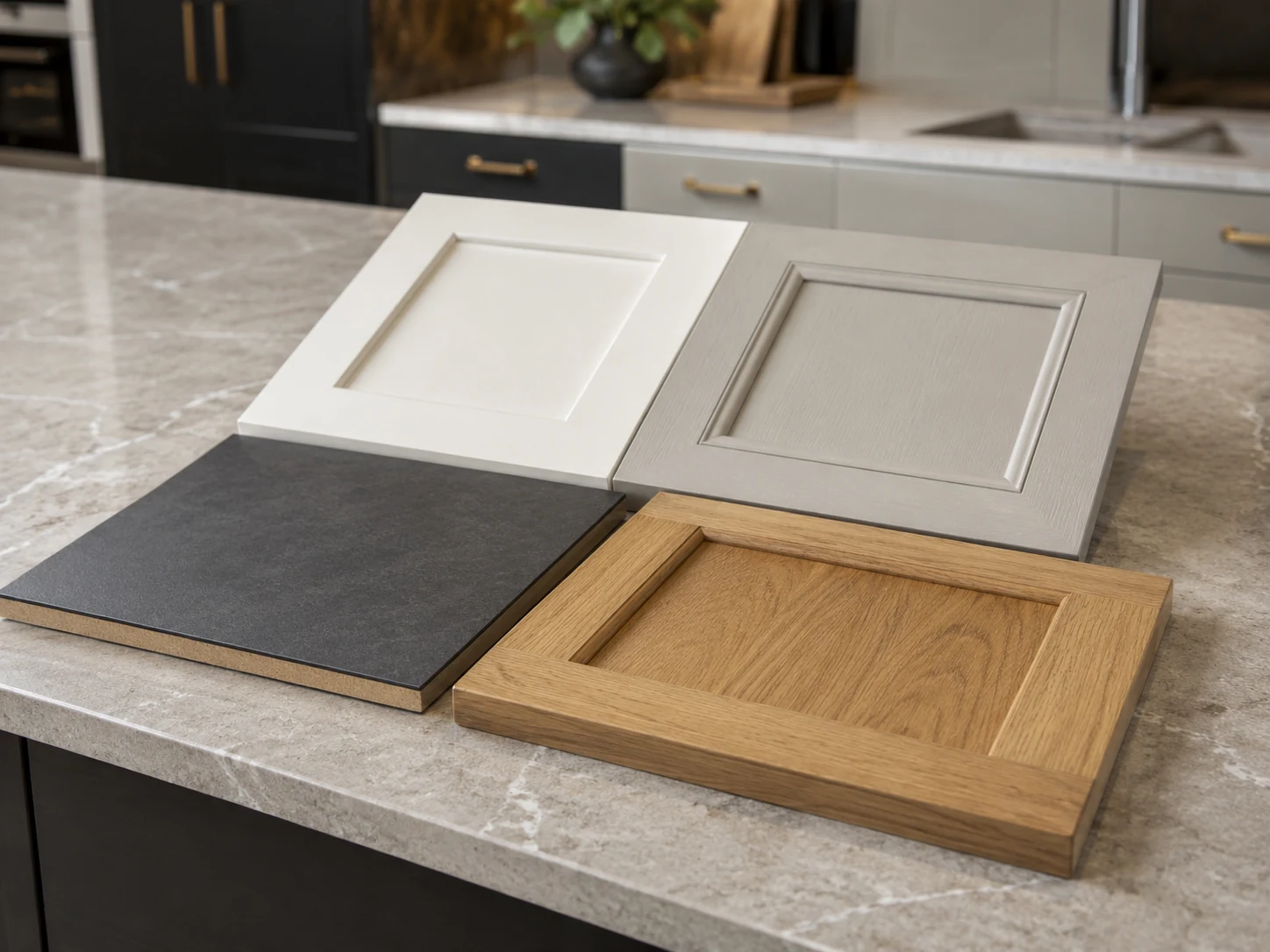
Painted kitchen cabinets suit homeowners who want maximum control over colour and a clean, refined look. A painted finish can transform cabinetry into a tailored design feature with almost any shade or sheen. It is one of the most adaptable options for new kitchens and renovations.
The appeal of painted cabinets lies in their smooth, uniform surface that hides grain and visually ties the room together. From crisp whites to deep charcoal or soft greige, a painted finish supports many styles, from Hamptons-inspired kitchens to contemporary minimalist designs.
Colour, Range and Design Flexibility
Paint is unmatched for colour choice. It can be tinted to match existing walls, flooring or feature elements, making it ideal for tying open-plan spaces together. Classic choices include warm white for a bright family kitchen, navy for contrast on an island, or soft green for a more traditional look.
Different sheens also change the effect. Matt or low-sheen paint gives a more understated appearance and helps disguise minor surface imperfections. Semi-gloss is often chosen for a slightly sharper look and improved cleanability. High gloss creates a very reflective contemporary finish, but it will highlight dents, uneven surfaces and fingerprints more easily, so it suits very precise cabinetry and flat door profiles.
Paint also allows two-tone schemes, such as a contrasting island or darker base cabinets with lighter overheads. This level of control can be harder to achieve with timber veneer or laminate ranges that are limited to preset colours and finishes.
Durability, Maintenance and Cleaning
Modern 2-pack polyurethane or similar hard-wearing paint systems can provide a robust surface suitable for busy kitchens. When correctly applied and cured, they resist most household stains and are generally suitable for normal kitchen conditions. However, cabinets should not be exposed to constant steam or heat from kettles, dishwashers or small appliances, as prolonged exposure can affect edges and joins over time.
Routine care is straightforward. Painted cabinets usually clean well with a soft cloth and mild detergent. Abrasive pads, harsh chemicals and cream cleansers should be avoided because they can scratch, dull or damage the finish, especially on darker colours where marks are more visible.
Small chips can appear, especially around high-use handles, rubbish pull-outs, corners and dishwasher areas. These chips are usually cosmetic rather than structural, but they can affect the appearance of the kitchen. Touch-up paint can reduce their visibility, although a perfectly invisible repair can be difficult on very smooth or high-gloss finishes.
Substrate Choice and Long-Term Performance
The performance of a painted finish depends heavily on what sits beneath it. Most painted cabinet doors and panels use high-quality moisture-resistant MDF because its smooth surface avoids visible grain and provides crisp edges. Solid timber can be painted, but natural movement can cause fine hairline cracks at joints as the wood expands and contracts.
Preparation is critical. Professionally finished cabinets are typically factory-sprayed in a controlled environment, producing a smoother and more durable surface than site painting. A factory finish also helps ensure consistent colour across doors, panels, fillers and visible ends, so the kitchen reads as one cohesive unit.
For homeowners wanting a custom colour palette, a sleek surface and the option to refresh the look in the future, painted kitchen cabinets remain one of the most versatile and design-driven choices.
Vinyl-Wrapped Kitchen Cabinets: A Practical and Easy-to-Clean Option
Vinyl-wrapped kitchen cabinets are often chosen by homeowners who want the look of a painted or profiled door without the higher cost of solid timber or 2-pack polyurethane. A vinyl wrap is a thin PVC film that is heated and pressed onto a cabinet door or drawer front, creating a smooth surface that is easy to wipe clean and resistant to everyday staining.
This finish suits busy households that need low-maintenance cabinetry with a modern, uniform appearance. It is also popular in new builds and investment properties where a fresh, contemporary look is required, along with practical durability and cost control.
How Vinyl-Wrapped Doors Are Made
Vinyl doors are typically made from routed moisture-resistant MDF board. The front face and edges are then covered in a single sheet of vinyl using vacuum or thermoforming technology. This process allows for smooth flat profiles as well as routed panel details, including shaker-style designs.
The back of the door is usually finished in a matching or complementary melamine. Because the vinyl wraps around the front face and edges, there is no separate front edge tape in the same way as some laminate doors. This can give the door a softer and more integrated appearance.
Vinyl wraps are available in a wide range of solid colours, woodgrains and matt or satin sheens. High-gloss options exist, although they are less common in many contemporary kitchens due to fingerprint visibility and the popularity of softer matt finishes.
Practical Benefits in Everyday Use
For day-to-day living, vinyl-wrapped cabinets offer several practical advantages that appeal to families and frequent cooks.
The surface is non-porous and easy to wipe down using a soft cloth with mild soapy water. Grease splatters and food stains do not readily absorb, keeping doors looking clean with minimal effort. There is no need for polishing or waxing and, unlike raw timber, the finish does not require regular resealing.
Vinyl has a slight flexibility, which can help it resist minor knocks and impacts better than some rigid painted finishes. Chips are less common than on painted edges, and small marks may be less visible due to the uniform colour layer.
Limitations, Care Requirements and Lifespan
Despite its advantages, vinyl wrap is not indestructible. Heat and moisture are the main risks that need to be managed. Prolonged exposure to high heat can cause the vinyl to soften and eventually lift. Steam from dishwashers, kettles or poorly ventilated appliance zones can also contribute to bubbling, peeling or delamination over time.
To maximise lifespan, it is important to:
- Use heat deflector strips around ovens where recommended
- Ensure adequate ventilation around appliances that generate steam
- Avoid placing kettles, coffee machines or steam-producing appliances directly under overhead cabinets
- Wipe off excess moisture rather than leaving doors wet
Harsh solvents, abrasive cleaners and rough scourers should be avoided, as they can dull the surface or cause fine scratching.
Vinyl wrap can be a practical mid-range choice, but once the surface starts to peel or bubble, repairs are often difficult to complete invisibly. In many cases, a damaged door may need to be replaced rather than patched.
Laminate Kitchen Cabinets: Durable Finishes for Everyday Use
Laminate kitchen cabinets suit busy households that need a hard-wearing surface that is easy to live with. Modern laminates offer strong resistance to stains, moisture and general wear, making them a practical alternative to painted or timber cabinetry in many Australian homes.
Constructed as a decorative surface bonded to a substrate, laminate doors provide a consistent finish in colour and texture with very little ongoing maintenance. For renovators balancing style with budget, laminate is often one of the most cost-effective ways to achieve a sleek contemporary look.
What Laminate Actually Is and How It Performs
High-pressure laminate, often called HPL, and low-pressure melamine, often called LPM or melamine board, are common options used in kitchen cabinetry. Both involve decorative paper impregnated with resin and bonded to a board, but they differ in density, durability and typical use.
Melamine-faced board is commonly used for cabinet carcasses, shelving and many standard cabinet doors. High-pressure laminate is usually a tougher decorative surface and may be selected where additional durability or a more specialised finish is required.
In practical terms, laminate:
- Resists everyday spills from coffee, oil, red wine and sauces
- Handles regular cleaning without colour fading
- Does not absorb moisture easily when properly edged and installed
- Offers a consistent colour or pattern across doors and panels
It is harder than most painted finishes, so it is less prone to chipping when bumped by pots, toys or vacuum cleaners. However, a very sharp impact at an edge can still dent or chip, which is why good edge detailing is important.
Design Options
Current laminate ranges include solid colours, subtle concrete looks, realistic woodgrains and ultra-matt or high-gloss finishes. This variety makes it suitable for:
- Contemporary minimalist kitchens with flat matt whites or greys
- Family kitchens that need forgiving mid-tone colours
- Rental or investment properties where robust, long-lasting surfaces are essential
- Modern handleless or slab-door designs
Woodgrain laminates can mimic timber reasonably well in a kitchen setting, although on close inspection they do not have the same depth, texture or natural variation as real wood. For a cohesive look, cabinet doors, panels, infills and open shelves can often be finished in the same laminate range.
Maintenance, Lifespan and Limitations
Care for laminate cabinets is straightforward. Wipe with a soft cloth, warm water and a mild detergent. Avoid scourers, harsh chemicals and very abrasive cleaners that can dull the surface. With basic care, laminate cabinetry can often look fresh for many years, depending on the quality of the product, the edging and the level of use.
There are, however, limitations to understand:
- Heat: Laminate can blister or delaminate if exposed to direct high heat or if hot appliances are placed too close to vertical panels. Heat shields and careful appliance placement reduce this risk.
- Repairs: Deep chips, dents and edge damage are difficult to fix invisibly. A damaged door is usually replaced rather than repaired.
- Seams and edging: Moisture resistance depends on proper edging and sealing. Quality ABS or PVC edging and professional installation are essential to help prevent water ingress around sinks, dishwashers and other wet zones.
For households that prioritise durability, low maintenance and budget control, laminate cabinetry provides one of the most practical finishes for a modern kitchen.
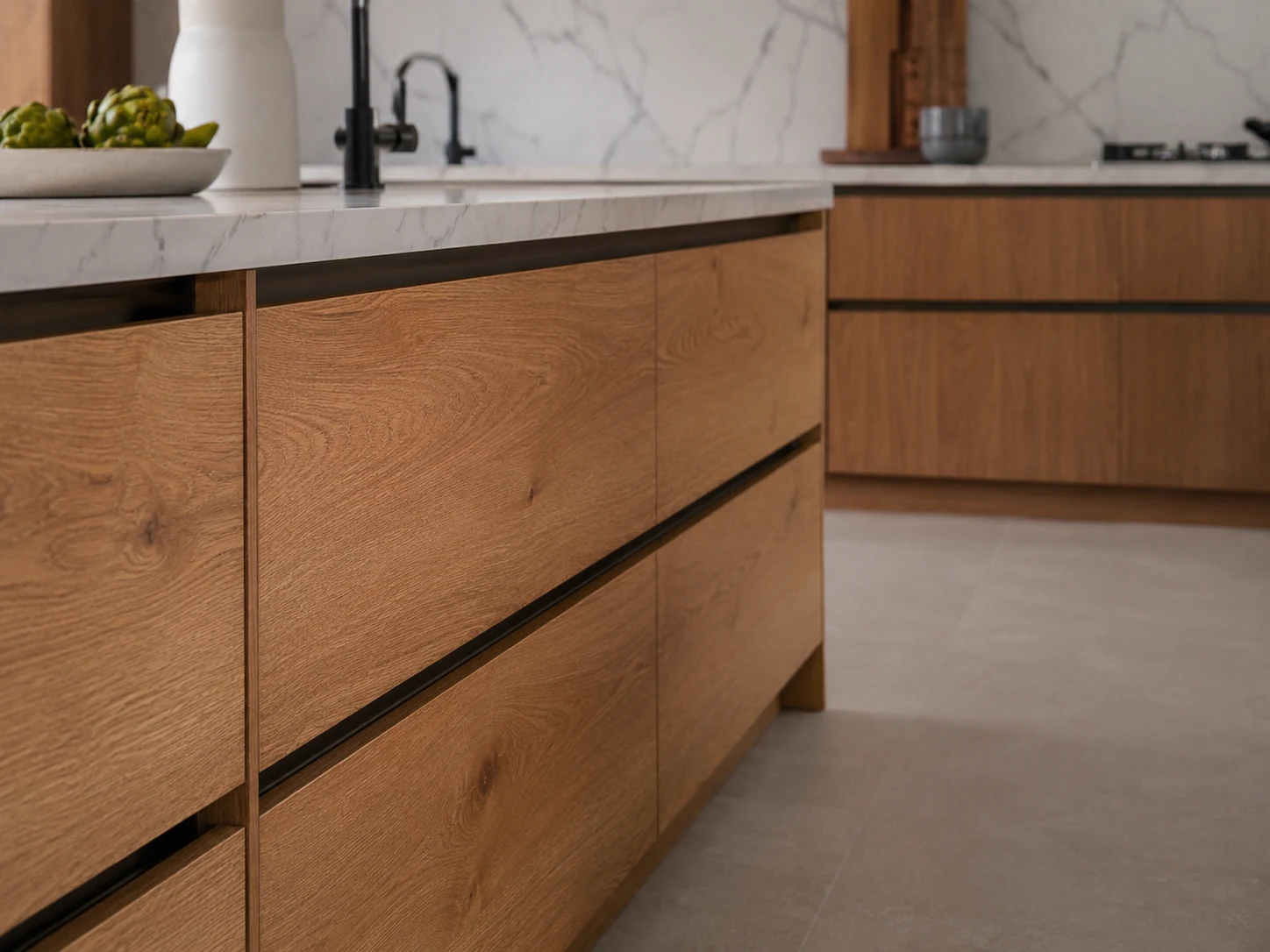
Timber Kitchen Cabinets: Natural Character and Appeal
Timber kitchen cabinets remain a benchmark for those who value warmth, authenticity and longevity. Rather than imitating the look of wood, solid timber and quality timber veneers deliver genuine grain variation, colour depth and a tactile surface that can develop character over time.
For renovators weighing painted, laminate or vinyl options, timber often appeals as the premium choice. It can often be refinished rather than replaced, is repairable when scratched and, with the right design, works equally well in contemporary, classic or coastal kitchens.
What Types of Timber Cabinets Are Available?
Timber cabinetry is generally delivered in one of two main ways: solid timber doors and panels, or timber veneer on a stable substrate.
Solid timber doors provide a more traditional, weighty feel with deeper profiling options. Timber veneer allows the beauty of real timber grain to be applied to a more dimensionally stable core, which can help minimise movement in changing temperatures and humidity.
Popular species include oak, walnut and ash. Each has distinct grain and colour characteristics, from pale and understated to rich and dramatic. Stains and clear finishes can alter the tone, highlight the grain or provide a more uniform appearance depending on the design brief.
Durability, Maintenance and Everyday Use
A major advantage of timber is its potential lifespan. With quality construction and a suitable protective finish, timber cabinets can last for decades. Scratches and small dents can often be sanded and refinished rather than requiring full door replacement.
Practicality depends heavily on the coating system. Options typically include:
- Clear polyurethane for strong protection and a natural look
- Hardwax oils for a softer, more tactile feel that can be spot-repaired
Gloss finishes tend to highlight imperfections, while matt and satin finishes disguise minor wear and provide a more contemporary appearance.
Timber still needs care in a kitchen environment. Spills should be wiped promptly, harsh cleaners should be avoided and protective coatings should be maintained so moisture does not penetrate the timber or veneer. Areas near sinks, dishwashers and appliance zones need careful detailing to protect edges and joins.
Design Flexibility and When Timber Is the Best Choice
Timber works well where a kitchen needs character rather than a flat, uniform surface. Vertical grain on tall pantry doors, integrated pulls routed into solid timber or a mix of timber base cabinets with painted overheads can all deliver a tailored look that is hard to achieve with purely synthetic finishes.
Timber is often the best fit when:
- A long-term, investment-level kitchen is the priority
- Natural materials are preferred over printed or wrapped surfaces
- Future flexibility to sand, stain or refinish is valued
- Warmth, grain variation and natural texture are part of the desired design
It is less suited to those wanting a perfectly consistent, pattern-free finish or the lowest upfront cost. Natural grain variation and slight colour differences between doors are part of timber’s appeal and should be embraced as a feature rather than treated as a flaw.
Which Cabinet Finish Is Best for Your Kitchen?
The best cabinet finish is the one that fits the way the kitchen is actually used, not just how it looks in a showroom. Choosing between painted, vinyl, laminate and timber comes down to durability needs, cleaning habits, design expectations and budget.
Thinking about how long the kitchen should last, how much maintenance is acceptable and how hard the space is worked each day will quickly narrow the options. Families with young children, serious home cooks or households that entertain often have different priorities to those renovating for resale or focusing on a premium aesthetic.
When Painted Cabinets Are the Better Choice
Paint is best when design flexibility is important. It allows for almost unlimited colour choice and works well with detailed door profiles, island features and two-tone kitchens. It also suits spaces where natural light is limited, as lighter painted finishes can brighten darker rooms.
However, it is not ideal for very rough use. Painted doors can chip on edges if hit with heavy objects, and visible marks may appear around frequently used handles. It suits households prepared to treat the kitchen with some care and who value appearance, colour choice and a smooth finish over absolute toughness.
When Vinyl or Laminate Make More Sense
Vinyl wrap can be a good mid-range choice for those who want a softer, more seamless look than laminate but need a practical and easy-to-clean finish. It fits well in many family kitchens where doors are opened constantly and occasional knocks are expected. Vinyl can also provide routed profiles similar to painted shaker doors at a lower cost, making it attractive in style-driven but budget-conscious renovations.
Laminate excels in hard-working kitchens where durability and easy cleaning are key priorities. It is resistant to stains, moisture and general wear when properly edged and installed, which suits rental properties, investment renovations or homes where the kitchen doubles as a homework or craft zone. Flat modern styles such as handleless or slab doors are particularly well-suited to laminate finishes.
When Timber Is Worth the Investment
Timber suits those prioritising a natural premium feel and long-term longevity. Solid timber or quality timber veneer can often be refinished, sanded and re-stained, which extends the life of the kitchen when properly maintained.
A timber finish is ideal in homes aiming for a warm, high-end aesthetic. It works best in households willing to accept some colour variation, natural movement and patina. Timber is less suitable where the lowest upfront cost is the priority or where maintenance is unlikely to be carried out.
No cabinet finish is universally better than the others. Painted, vinyl, laminate and timber cabinets each suit different budgets, maintenance expectations, design goals and levels of everyday use. Laminate and vinyl are practical choices for busy households wanting easy cleaning and budget control. Painted finishes offer greater colour flexibility and a refined look, while timber provides natural warmth, repairability and long-term appeal when properly maintained. The best result comes from choosing a finish that suits both the style of the home and the way the kitchen will be used every day.