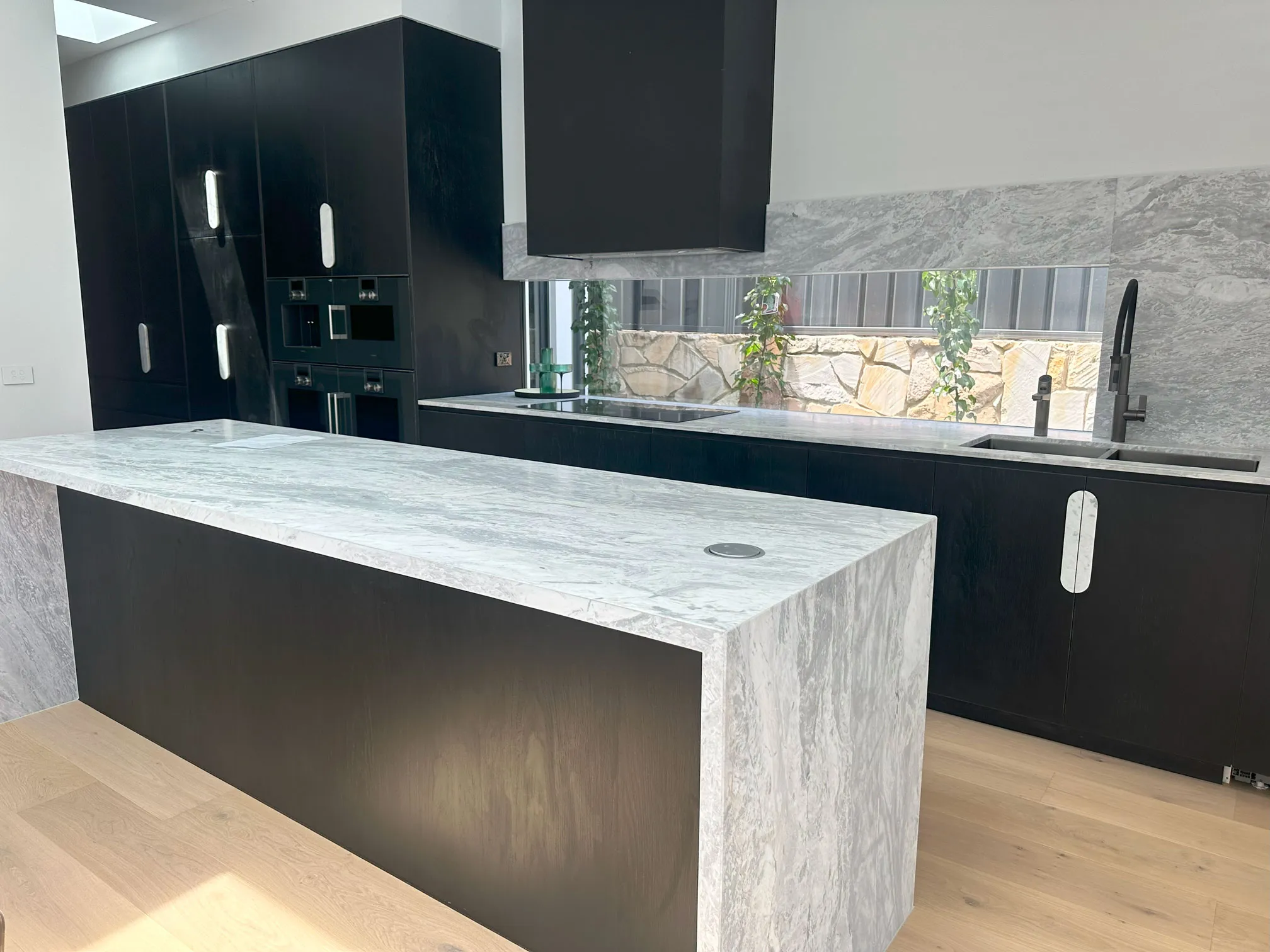
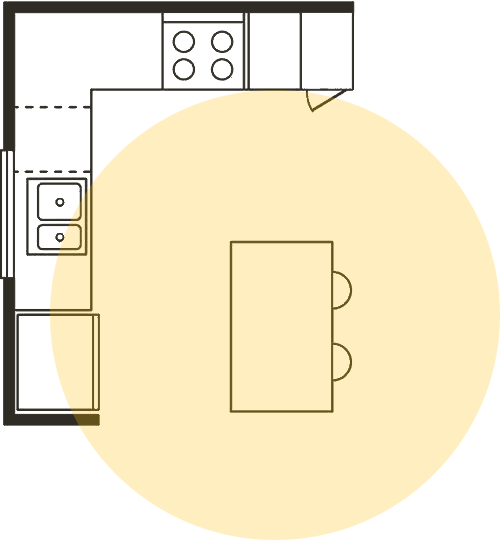
A fridge concealed behind matching cabinetry can make a kitchen feel more cohesive, particularly when it opens onto a living or dining area. However, a seamless appearance is only worthwhile if the appliance has enough space for everyday groceries and remains convenient to use.
If you are planning a kitchen renovation, Caliber Kitchens can coordinate cabinetry design with the requirements of a chosen appliance. Before finalising the joinery, compare usable capacity, check door and drawer clearance and understand the ventilation and installation requirements. Also consider the cost of custom panels, future servicing and eventual replacement before committing to an integrated fridge.
What Would I Gain by Hiding My Fridge Behind Cabinetry?
The main benefit of an integrated fridge is visual continuity. Instead of a visible appliance door, the refrigerator has a cabinet front that matches the surrounding joinery. This can make the kitchen feel less cluttered, particularly when tall cabinetry forms part of the view from nearby living spaces.
Whether integration is worth it depends on the desired appearance and the practical trade-offs. A concealed fridge is not automatically more efficient or convenient than a freestanding model, so the decision should account for household needs as well as design preferences.
Compare fridge running costs using the government’s Energy Rating Calculator to assess energy consumption and estimated running costs alongside the purchase price.
Integrated Appliances Versus a Freestanding Fridge in a Recess
A purpose-designed integrated fridge accommodates a furniture panel and a specified cabinet arrangement. Its hinges, panel dimensions and surrounding joinery must suit the selected appliance. It is not simply a standard fridge with a cupboard door attached to the front.
A freestanding fridge in a recess remains visibly identifiable as an appliance, although surrounding cabinetry can give it a more finished appearance. It retains its own doors and handles and the manufacturer's required clearances must still be maintained.
The distinction matters when comparing renovation proposals. A drawing might show a neat bank of tall cabinets without making it clear whether the design includes a fully integrated appliance or a recess for a freestanding model. Ask the designer to identify the intended arrangement and clarify what is included in the cabinetry scope.
Neither option is inherently better. A freestanding fridge may offer a wider choice of models and suit households that prioritise capacity or flexibility. An integrated model may be worth the additional coordination when uninterrupted cabinet fronts are important to the design.
Creating a Cohesive Look in an Open-Plan Kitchen
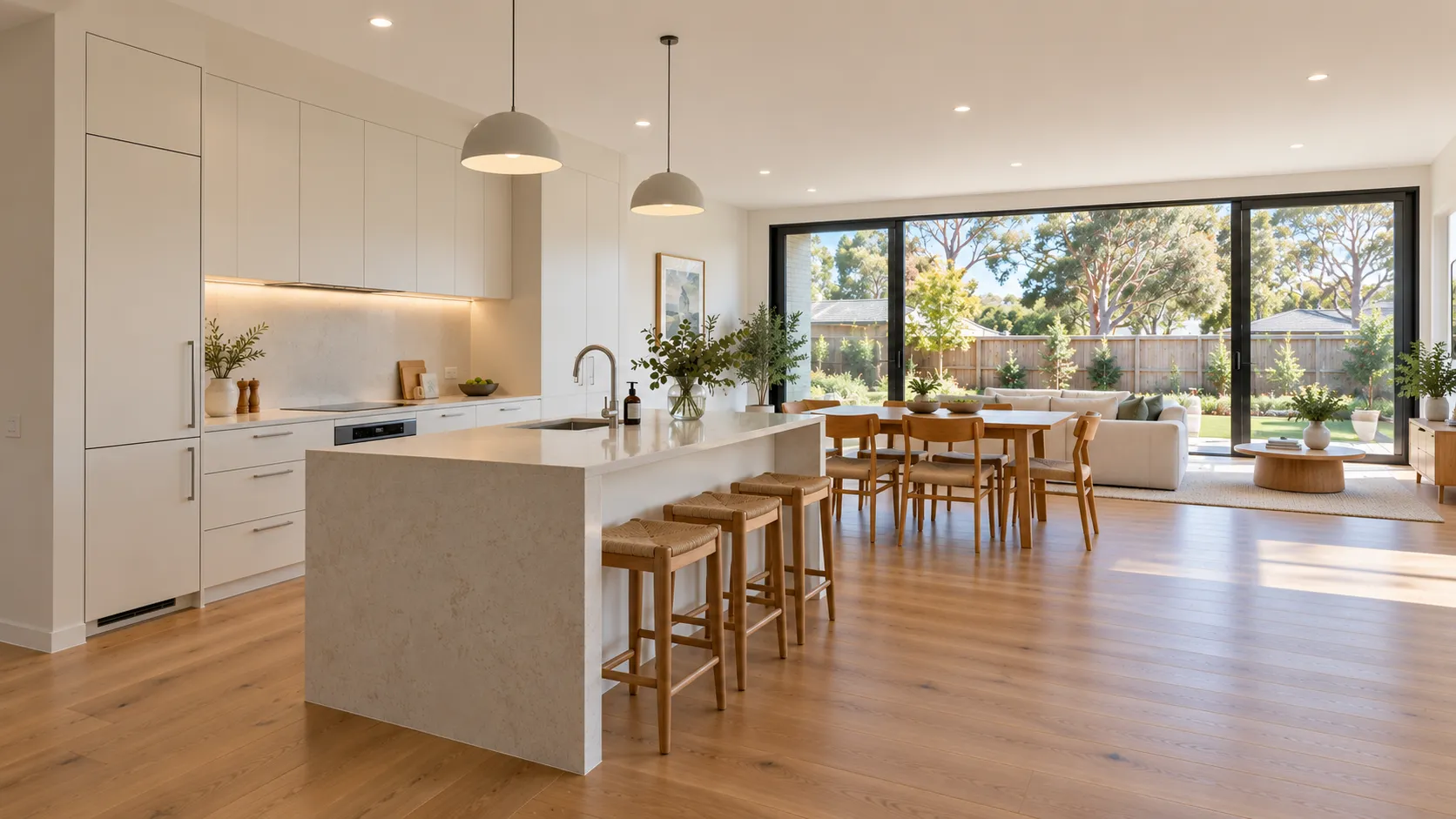
In an open-plan kitchen, a large appliance door can become a noticeable feature from the dining table or sofa. Matching the fridge front to the surrounding cabinetry reduces this visual interruption when the appliance sits within a bank of tall cupboards.
However, a concealed fridge is not necessarily quieter. Compressors and cooling fans can still produce operating noise, depending on the model and installation conditions. Check the appliance specifications rather than assuming a cabinet front will reduce the sound.
When researching kitchens in Canberra, compare completed designs for their practical details as well as their appearance. Handle placement, panel proportions and the alignment of adjacent doors all contribute to a cohesive finish. These decisions should be considered alongside the other factors involved in a kitchen renovation, rather than left until the finishing stages.
Will an Integrated Fridge Suit the Way I Shop and Cook?
A fridge needs to accommodate the food a household regularly buys, not just fit neatly into a cabinet elevation. An integrated model can work well for everyday use, but its external dimensions do not establish how much useful storage it offers.
Access matters just as much as capacity. A fridge door might open far enough to reach the shelves but not far enough to remove an internal drawer comfortably. Checking these factors before the cabinetry is manufactured can help prevent everyday frustrations.
Usable Capacity Matters More Than External Dimensions
Start with the household's shopping habits. If groceries are purchased weekly, the fridge needs to accommodate the larger load immediately after a shop. Households that prepare meals in advance should also allow space for stacked containers, fresh ingredients and leftovers.
Published capacity figures help compare appliances, but the internal layout determines how effectively that space can be used. Shelf depth, drawer proportions and door compartments influence whether the fridge suits particular groceries. Two models with similar stated capacities can offer quite different storage arrangements.
Consider the items that regularly need refrigeration. A wide serving platter, a tall drink container or a large saucepan can reveal limitations that are not obvious from a litre figure. Adjustable shelves provide flexibility, although moving one shelf may reduce the available space elsewhere.
Freezer capacity deserves separate consideration. Households that freeze batch-cooked meals or buy frozen food in bulk should check the size and arrangement of freezer drawers and compartments. A fridge with sufficient fresh-food storage may not offer enough freezer space.
Integration does not automatically mean sacrificing capacity and freestanding models are not always more practical. Compare the specifications and internal layouts of the actual appliances being considered before deciding.
Door Opening and Drawer Access During Everyday Use
Check how far the selected fridge door must open for internal drawers to extend fully and for shelves or compartments to be removed for cleaning. The required opening angle varies by model and nearby walls or cabinetry can restrict movement even when the appliance technically fits.
Cabinet-front design also affects everyday operation. Handle placement, finger clearance and how the furniture panel moves should make the door comfortable to open, including when carrying groceries or preparing several dishes at once.
Test the selected appliance or a comparable model in person. Open the drawers, adjust a shelf and check whether the containers used regularly will sit comfortably inside. If the display model does not have the proposed cabinet front, ask which aspects of the finished installation cannot be demonstrated.
A little time spent checking access can help prevent a design that looks excellent on paper but feels awkward during daily use.
What Cabinetry Choices Affect Servicing and Replacement?
Integrated fridge cabinetry must be designed around the selected appliance rather than an assumed standard size. Dimensions are only one part of the specification, as ventilation, furniture-panel requirements and hinge arrangements also influence the joinery.
The design should account for installation and future maintenance. Although no cabinet layout can guarantee compatibility with every future appliance, careful planning and accurate records can make later servicing or replacement easier.
Ventilation and Cabinet Fronts Must Suit the Selected Model
Select the appliance before the surrounding cabinetry is finalised. A nominal cabinet width is not enough to confirm compatibility, so the kitchen designer and installer need the chosen model's current installation documentation.
Manufacturer-specified ventilation must be incorporated into the design. Airflow requirements may affect the cabinet base, top or other parts of the enclosure, but it depends on the appliance. These provisions should not be reduced or concealed simply to achieve a cleaner appearance. Ask the supplier to explain how the proposed cabinetry accommodates the required airflow.
Furniture panels also have model-specific requirements. Their dimensions, thickness and weight must comply with the appliance's specifications, while the hinge system must allow the panel to move correctly. Compatibility should never be assumed based on another integrated fridge.
Service access should be discussed before manufacturing begins. Ask how a technician would access or remove the appliance and whether surrounding panels or trim would need to be taken apart. If the selected model requires a water connection, that requirement should also be identified during design coordination.
Any electrical or plumbing changes must be assessed and completed by licensed professionals. Confirming these requirements helps the cabinetry, appliance and installation work fit together as intended.
What to Consider When Budgeting for an Integrated Fridge
The purchase price of an integrated fridge is only one part of the total cost. The finished installation may also require custom furniture panels, compatible hinges, additional joinery and coordination between the appliance supplier and kitchen installer.
The overall cost depends on the chosen model, cabinet design and installation requirements. A straightforward installation may involve little additional work, while a more complex arrangement could require specialised panels or modifications to the surrounding cabinetry.
Future replacement is another consideration. A new fridge with similar external dimensions may use different hinges, panel dimensions or ventilation provisions. Some cabinetry may be reusable, but alterations or a replacement cabinet front could be necessary.
When budgeting for a kitchen renovation, separate the appliance allowance from the associated joinery and installation costs. Ask which panels, fittings and installation-related tasks are included in the quote and clarify how a change of appliance model would affect the proposed work.
Keeping Records for Future Maintenance
Keeping the appliance model number, installation documentation and cabinetry specifications can help a future supplier assess replacement options. Records of the cabinet finish are useful too, although an exact match may become harder to achieve as materials age or finishes change.

It is also worth retaining information about the furniture-panel arrangement and hinge system. These details can help determine whether a replacement appliance will work with the existing joinery or require modifications. Before purchasing, ask the appliance supplier about servicing support and the availability of repairs and spare parts f or the selected model.
Before approving the final design, confirm that the selected appliance's installation requirements have been checked and that there is a clear plan for accessing it if servicing becomes necessary. This helps balance the desired appearance with the practical needs of long-term ownership.
An integrated fridge can create a cohesive kitchen design, particularly in open-plan homes where visible appliances interrupt the surrounding cabinetry. However, the best choice depends on more than appearance. Caliber Kitchens can help consider how preferred appliance fits into the cabinetry design and renovation budget. Confirming the model and its installation requirements before manufacturing begins keeps the design practical, the costs clearer and the finished kitchen easier to use.