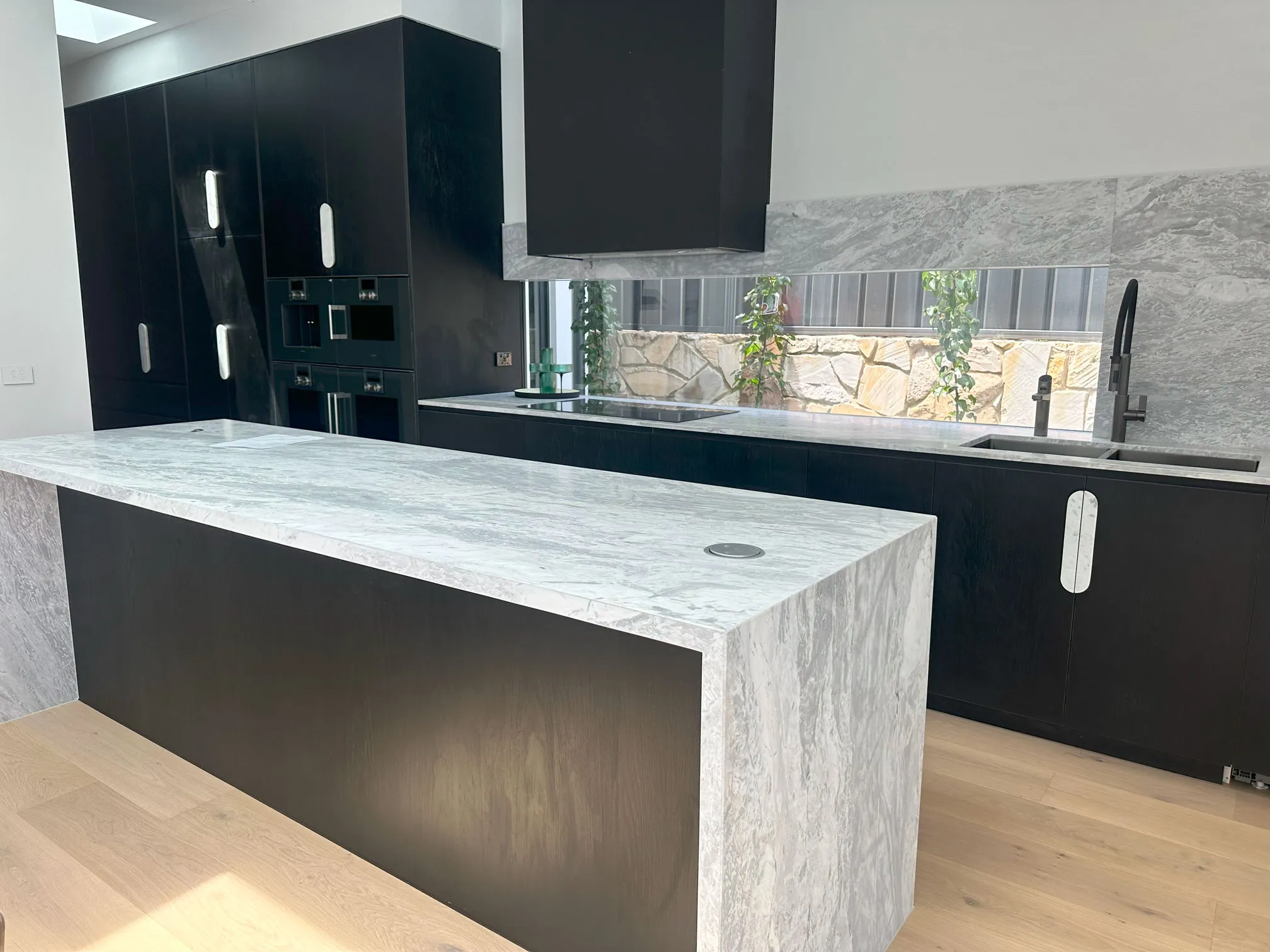
A compact kitchen can work just as effectively as a larger one when the layout, storage and finishes are planned with care. In many projects involving kitchen renovations in Canberra, the goal is not to increase floor area but to make the existing space feel more open, functional and visually balanced. Caliber Kitchens explores how thoughtful cabinetry, integrated appliances, refined material selections and well-planned lighting can help transform a small kitchen into one that feels calm, organised and easy to use.
This article examines the design choices that have the greatest influence on how spacious a compact kitchen feels. It looks at layout improvements, smarter storage, colour and finish selections, and lighting strategies that can make the room feel larger without major structural changes. It also highlights when a more substantial renovation may be worth considering to improve both function and long-term value.
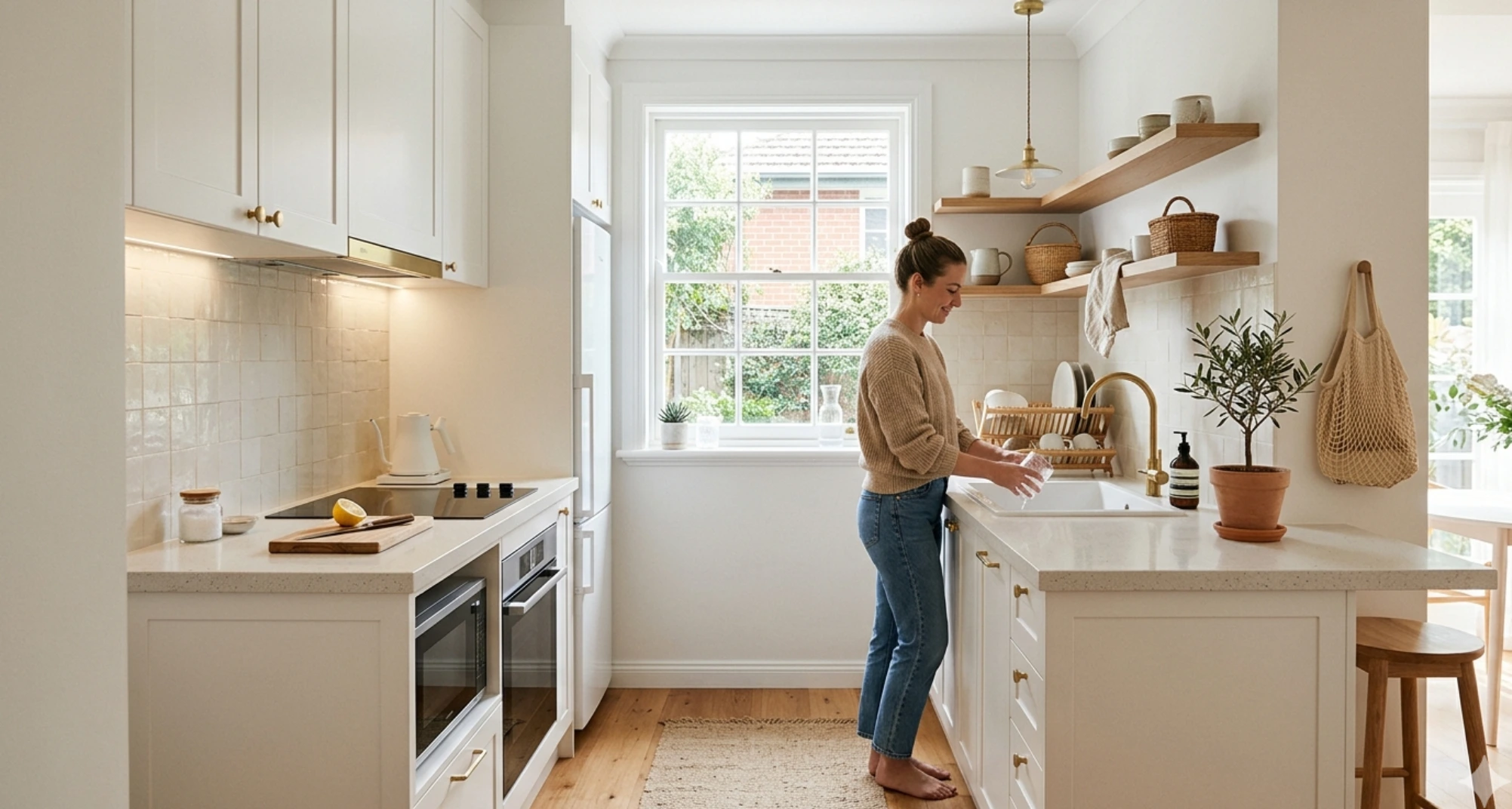
Why Some Kitchens Feel Smaller Than They Are
Many kitchens feel cramped even when the floorplan suggests they should function well. The difference often comes down to how light, colour, layout and visual clutter interact. When these elements are not carefully considered, the room can feel closed in, awkward to move through and visually heavy.
Understanding why a kitchen feels small is the first step before changing a single cabinet or tile. Once the main causes are identified, it becomes much easier to make design decisions that improve the sense of space without altering the room’s footprint.
isual Clutter and Overloaded Surfaces
Crowded benchtops instantly make a kitchen feel smaller. Small appliances lined up along every edge, stacks of utensils, open packets and too many decorative items break the eye into short stops rather than allowing it to travel across clear surfaces. The result is visual noise, which makes the room feel tighter and busier than it really is.
Open shelving can have the same effect when it is overfilled with mismatched mugs, bowls and containers. Every extra object adds another colour, shape and texture competing for attention. Even a kitchen with reasonable proportions can start to feel chaotic when too much is left on display.
Reducing clutter is not only about adding storage but also about being selective with what remains visible. Closed cabinetry can conceal bulkier or less attractive items, while clear benchtop zones for food preparation help the room feel more open and purposeful. Keeping only a few well-chosen items on display allows more negative space around objects, which helps the kitchen read as calmer and more generous.
Dark Finishes and Poor Lighting
Colour and light have a strong influence on perceived size. Dark cabinetry, heavy benchtops and deep wall colours absorb available light rather than reflecting it. In a small kitchen, this can create shadows in corners and recesses that visually pull the walls inward.
Poor lighting makes the problem worse. A single ceiling fitting in the middle of the room often leaves benchtops dull and wall cabinets in shadow. Instead of feeling bright and practical, the kitchen can feel closed in and flat. A layered lighting approach usually works far better, with under-cabinet lighting brightening work areas, ceiling lighting spreading illumination more evenly, and lighter finishes on doors, splashbacks and walls helping bounce light around the room.
Even when the room dimensions stay exactly the same, a brighter and more reflective scheme can make the kitchen feel noticeably wider and more open.
Awkward Layouts and Interruptions to Flow
A kitchen can measure well on paper yet still feel small if movement through the space is awkward. Bulky islands that narrow walkways, fridges placed where doors clash, or tall cabinetry positioned at the entry can all make the room feel blocked and harder to use.
Frequent visual interruptions can also make the space feel more fragmented. Changes in cabinet height, mixed handle styles and several different benchtop or splashback materials break the room into smaller sections. Instead of reading as one connected space, the kitchen feels chopped up and cramped.
Consistent lines and clear circulation zones make a real difference. Aligning overhead cabinetry, limiting the number of materials used and maintaining at least one generous walkway can dramatically improve how the kitchen feels without increasing its physical size.
Layout and Storage Changes That Improve Space
Layout and storage decisions have more influence on how large or small a kitchen feels than any single appliance or finish. The aim is to reduce visual clutter, improve workflow and create smart storage for everyday items so surfaces stay clear and sightlines remain open.
By refining the arrangement of cabinetry and appliances, then making better use of storage from floor to ceiling, a compact kitchen can function far more like a larger one without moving a single wall.
Rethinking the Layout for Better Flow
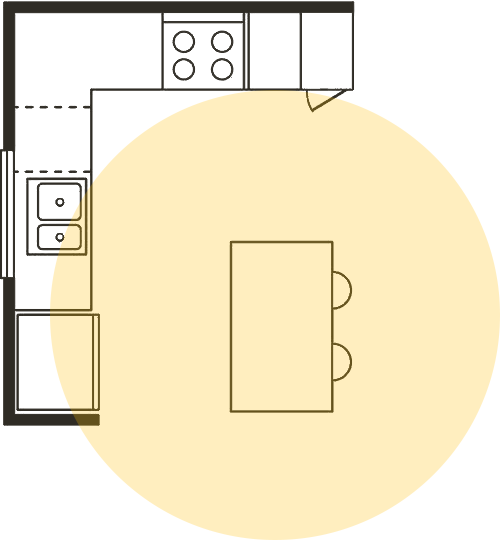
The work triangle between the cooktop, sink and fridge should feel short and efficient. Positioning these three elements in a tight triangle or along two adjacent walls helps reduce unnecessary movement and keeps the layout feeling connected. When the fridge is placed too far away or hidden behind an island, the kitchen can quickly feel disjointed and congested.
Galley kitchens often benefit from grouping tall elements on one wall. Housing the fridge, oven and pantry cabinetry together frees the opposite side for lower units and uninterrupted benchtop space, which helps open up the view. Where possible, overhead cupboards should also be aligned so doors do not clash in narrow walkways.
In smaller rooms, a peninsula often works better than a full island. A slim peninsula can provide extra storage and casual seating while keeping the central floor area more open. If an island is included, it needs to be proportioned carefully, with integrated storage and walkways of at least 900 mm around it so the room does not feel pinched.
Using Vertical Space to Reduce Clutter
Unused wall height often contributes to wasted storage potential. Taking cabinetry to the ceiling removes the dust-collecting gap above cupboards and gives the kitchen a taller, more tailored look. Higher shelves can be reserved for seasonal or less frequently used items, while everyday essentials stay within comfortable reach.
Open shelving can still have a place, but it needs to be used carefully. One or two short runs for attractive crockery or glassware can lighten the appearance of a wall, while too many exposed items can quickly reintroduce clutter. Balancing open shelves with closed cabinets helps the room feel lighter without sacrificing practical storage.
Where full-depth cabinetry feels too heavy, shallow pantry units or reduced-depth wall cabinets can add useful storage without making the room feel closed in. Slim pull-out units beside the cooktop or fridge can also turn awkward gaps into practical storage for oils, trays and chopping boards.
Smart Storage Solutions That Free Benchtops
Good storage in a small kitchen is really about getting items off the benchtop. Deep pot drawers with internal dividers are often more efficient than traditional cupboards for storing cookware, lids and dishes. Corner carousels and pull-out corner systems can also turn otherwise awkward spaces into accessible storage rather than dead zones.
Integrated bin systems hidden within base cabinets help keep the floor area and under-sink zone tidier while maintaining a cleaner visual line across the kitchen. Drawer inserts for cutlery, utensils and spices also prevent drawers from becoming catch-all spaces and reduce the need for countertop organisers.
Small appliances can make a particularly big difference to how cluttered a kitchen feels. Housing the microwave in a tall unit and creating an appliance cupboard for items such as the toaster or coffee machine can free up valuable preparation space and make the room feel calmer and more spacious.
Cabinetry, Colour and Finishes That Open Up the Room
Every surface in a kitchen either supports a sense of openness or contributes to visual heaviness. Cabinet style, colour and finish can all influence how large the room feels by affecting the way light moves and how the eye reads height, width and depth.
Thoughtful selections in door profiles, hardware and benchtop materials help create cleaner sightlines and a more cohesive look. The aim is to reduce visual clutter while still introducing enough contrast and texture to avoid a flat or overly clinical result.
Using Colour to Create a Greater Sense of Space
Colour can strongly influence how a small kitchen is perceived. Light to mid-tone palettes reflect more light, which helps the room feel broader and brighter. Soft whites, warm greys and pale greiges often work well because they brighten the room without feeling stark.
Matching cabinetry closely to wall colours can reduce visual breaks and make the units feel more integrated into the room. This helps the kitchen appear less crowded by bulky joinery and more like part of the architecture itself. In some layouts, a slightly deeper tone on the base cabinets with lighter overhead cupboards can help lift the ceiling line and keep the upper part of the room feeling airy.
In tighter spaces, carrying one consistent colour across base and wall units can create a cleaner and more streamlined effect. A darker toe kick that blends with the floor can also visually ground the room while allowing the main cabinetry to feel lighter.
Selecting Reflective but Practical Finishes
The finish level of cabinetry and surfaces subtly affects spaciousness. Satin or semi-gloss cabinetry can reflect enough light to keep the room bright while still disguising everyday wear better than a high-gloss finish. High gloss can work in very modern kitchens, but in smaller rooms without strong natural light it can highlight fingerprints and feel harder to maintain.
Benchtops with a soft matte or honed finish and fine veining usually create more depth than heavily patterned stone or very dark solid colours, which can feel visually dense in a compact footprint. Lighter benchtops with gentle variation tend to support a more open look.
Splashbacks also have a strong effect on perceived space. Gloss tiles, large-format tiles or slab splashbacks can all help reflect light and reduce visual interruption. Using grout that closely matches the tile colour helps avoid a busy grid effect, which can make the wall feel more broken up and enclosed.
Coordinating metal finishes across handles, tapware and lighting also helps the eye move more smoothly through the room. Restricting the palette to one or two related tones makes the kitchen feel more cohesive and less visually crowded.
Lighting Choices That Help the Kitchen Feel Larger
Lighting has more impact on how large a kitchen feels than many people expect. A well-lit small kitchen appears brighter, cleaner and more open, while poor lighting creates shadows that make boundaries feel closer and the room feel more confined. The goal is to remove dark corners, layer light sources and draw attention across the room rather than down to isolated pockets of light.
Start With Bright, Even General Lighting
Recessed LED downlights spaced evenly across the ceiling can help maintain consistent light levels throughout the room. In many kitchens, this means placing fittings around 1.2 to 1.5 metres apart and slightly away from overhead cabinetry so work surfaces do not sit in shadow. A neutral white colour temperature of around 3000K to 3500K usually feels bright enough for task areas while still remaining warm and comfortable for a home.
Low-profile flush-mounted fittings can also work well in kitchens with lower ceilings. Heavy or decorative fittings with dark shades are usually less effective in a compact space because they draw attention to the ceiling height and can block light distribution. In most small kitchens, the ceiling light should support the room quietly rather than become a dominant feature.
Use Task Lighting to Eliminate Shadows
Under-cabinet LED strip lighting is one of the most effective ways to make a small kitchen feel brighter and more usable. Positioned towards the front underside of overhead cupboards, these lights help spread illumination evenly across the benchtop and remove shadows caused by cabinetry above. Continuous diffused strips tend to give a more seamless result than individual point lights.
Task lighting over sinks and cooktops is also important. Slim recessed fittings or simple spotlights aimed directly at these work areas can improve usability without needing to flood the whole room with extra light. Keeping the same colour temperature across general and task lighting helps the room feel cohesive and prevents harsh visual shifts between different zones.
Small Visual Details That Make a Noticeable Difference
Subtle visual details can change how large or cramped a kitchen feels without altering its footprint. Small adjustments to lines, finishes and hardware guide the eye more smoothly through the room, reduce visual interruptions and create a calmer overall impression.
Attention to these elements helps a compact kitchen feel intentional and refined rather than squeezed into the available space.
Streamlined Lines and Simplified Surfaces
Flat-front or only lightly profiled cabinet doors usually read as lighter than ornate styles. Handles that sit flush or follow a simple linear form also reinforce a sense of order. Aligning the tops of overhead cupboards with nearby door frames or window heads can help avoid a broken or stepped look across the upper part of the room.
Benchtops with minimal patterning or subtle veining generally look more expansive than highly speckled or strongly contrasting surfaces. In the same way, large-format splashback tiles or a single slab surface reduce grout lines and allow the wall to feel broader and less cluttered. Using the same or closely related materials across adjoining surfaces can also help create a stronger sense of continuity.
Thoughtful Use of Contrast and Colour
Keeping cabinetry within a similar tonal range to the walls reduces visual bulk and helps the joinery sit more quietly within the room. If two colours are used, placing the darker shade on the base cabinets and the lighter shade above prevents the upper level from feeling too heavy. A light splashback that blends with the wall colour can also draw the eye outward rather than stopping it at a strong dividing line.
Benchtops that sit between the tone of the floor and cabinetry often create a balanced transition through the room. Limiting the overall palette to two main tones and one accent usually helps avoid a patchy or overworked appearance.
Hardware, Lighting and Reflective Accents
Small hardware choices can have a cumulative effect. Fewer, more substantial handles generally look less fussy than many small ones, especially in a compact kitchen. Matching hardware finishes with tapware and light fittings helps create consistency rather than a mix of competing elements.
In very tight kitchens, integrated finger pulls or touch-latch doors can reduce visual and physical interruptions. Reflective accents such as gloss splashbacks, satin metallic trims or lightly sheened paint finishes can also help bounce light into darker parts of the room. When used selectively, these details brighten the kitchen without making it feel overly polished or clinical.
When a Larger Renovation May Be Worth It
Smart layout changes and visual strategies can do a great deal to improve a compact kitchen. However, there are situations where smaller upgrades only go so far and a more substantial renovation becomes the better long-term decision. The key is recognising when cosmetic improvements can no longer overcome structural or functional limitations.
When Structural Changes Improve Function and Value
Some small kitchens are constrained by non-load-bearing walls, nibs or other elements that take up usable space and block light. In these situations, removing or reducing part of a wall can have a dramatic effect on both function and perceived spaciousness.
A more substantial renovation may be worth considering when a solid wall separates the kitchen from the living or dining area and limits natural light, when a narrow doorway creates a constant pinch point, or when old soffits, bulkheads or redundant ducting reduce ceiling height and make the room feel compressed.
Creating a wider opening, pass-through or breakfast bar can often deliver many of the benefits of open-plan living without requiring a full structural overhaul.
Infrastructure Upgrades That Unlock Better Layouts
Larger renovations can also address hidden service constraints that limit layout options. In older homes, plumbing, electrical and ventilation positions often dictate where appliances and fixtures must remain, which can lock the kitchen into an inefficient arrangement.
Upgrading these services can open up better possibilities, such as relocating the sink under a window, extending benchtops along a more practical wall or adding more effective task and ambient lighting. In many cases, these infrastructure changes improve day-to-day use immediately while also increasing the kitchen’s appeal to future buyers.
Making a small kitchen feel larger comes down to thoughtful design rather than simply increasing floor area. A well-planned layout, efficient storage and carefully selected finishes can all help create a space that feels open, functional and visually balanced. Clean sightlines, consistent materials and layered lighting work together to reduce clutter and improve the sense of depth, while smaller details such as hardware, cabinetry style and reflective surfaces reinforce the overall effect.
When these elements are considered together, even a compact kitchen can feel spacious, efficient and enjoyable to use. With the right design decisions, a smaller kitchen can deliver long-term practicality and visual appeal without the need for major structural expansion.