Most homeowners understand the importance of a beautiful bathroom, but far fewer realise how easily poor ventilation can undermine that investment. Caliber Kitchens regularly sees how small oversights in extraction design and everyday use allow steam to linger on walls, ceilings and joinery. Over time, trapped moisture encourages mould growth, damages paint and plaster and can even shorten the life of cabinetry and fixtures. What starts as fog on a mirror can quietly develop into a serious issue that affects comfort, indoor air quality and the long-term value of a home.
Across many bathroom renovations in Canberra, ventilation is treated as a secondary detail rather than a core design element. This article explores the most common renovation and ventilation mistakes that lead directly to mould and moisture damage. Readers will learn how incorrect fan sizing, inadequate ducting, poor vent placement and everyday habits all contribute to damp, unhealthy bathrooms. By understanding where ventilation typically goes wrong and what good practice looks like, homeowners can make informed decisions when renovating or troubleshooting existing problems.
Why Poor Bathroom Ventilation Leads to Mould and Moisture Damage
Bathrooms generate more moisture than any other room in the home. Without effective ventilation, that warm, humid air has nowhere to go. It lingers on walls, ceilings and fixtures, creating the perfect conditions for mould growth and long‑term moisture damage. Experts often see avoidable problems like peeling paint, swollen cabinetry and stained ceilings that all trace back to inadequate bathroom extraction.
Good ventilation is not just about having a fan. It is about removing the right amount of moist air at the right time and replacing it with drier air from the rest of the home. When this balance is wrong, moisture stays in the room long after a shower finishes and the damage begins.
How Steam Turns Into Condensation and Mould
When someone showers, the air in the bathroom heats up and becomes saturated with water vapour. If the fan is weak, poorly placed or not used long enough, steamy air hits colder surfaces such as tiles, mirrors and plasterboard. The vapour then condenses into tiny water droplets and sits on these surfaces.
Persistent condensation keeps surfaces damp for hours. Mould spores, which are always present in small amounts in indoor air, quickly settle into any porous or textured surface, such as grout, silicone sealant, painted plaster and timber trims. Within days, black or green mould spots can appear around the shower, on the ceilings or behind the toilet. Once mould roots into grout or plaster, it is difficult to remove completely and often stains return because the underlying moisture problem remains.
Hidden Moisture and Structural Damage
Moisture problems are not limited to visible surfaces. If ventilation is poor, moisture can work into gaps around fixtures, light fittings, fan housings and window frames. Eventually, this can:
- Soak into plasterboard, leading to sagging soft spots or bubbling paint
- Penetrates behind tiles, weakening tile adhesive and causing drummy or loose tiles
- Swell MDF or particleboard in vanities, shelving and architraves, causing warping and splitting
Moisture can reach framing timbers or subfloor areas. This can contribute to timber rot and corrosion of metal fixings. Often, homeowners only notice a problem when musty odours appear or when visible mould emerges at corners and junctions, but by then, hidden materials may already be compromised.
Why “Cracking a Window” Is Not Enough
Many people assume opening a bathroom window during or after a shower will solve moisture issues. In reality, natural ventilation is inconsistent, especially in cooler or humid weather. Without a properly sized and ducted exhaust fan, humid air tends to linger at ceiling level or in corners instead of being actively expelled outside.
Fans that vent into the ceiling cavity instead of outdoors simply move moisture to another problem area. Warm, moist air trapped in the roof space can lead to condensation on rafters, insulation and roof linings, increasing the risk of mould above bedrooms and living areas. Correctly designed ventilation draws moist air directly outside and brings in replacement air from the rest of the home, so surfaces dry quickly and mould has less chance to develop.
Common Bathroom Ventilation Mistakes Homeowners Often Make
Many assume that simply having an exhaust fan is enough to prevent mould and moisture damage. In reality, several small but important ventilation mistakes can add up to persistent condensation, peeling paint and eventually structural issues. The same problems are frequently repeated in bathrooms that look modern on the surface but are quietly trapping humid air where it does the most harm.
Understanding these common errors helps homeowners spot problems early and correct them before costly repairs are needed. The key is not just installing ventilation but ensuring it is sized correctly, used consistently and able to expel moist air outdoors rather than recycling it back into the home.
Using the Wrong Size or Weak Exhaust Fan
One of the most frequent issues is an exhaust fan that is simply too small for the room. A compact fan may be suitable for a tiny powder room, but it cannot clear steam from a full family bathroom with a bath and shower. When the fan cannot exchange the air quickly enough, moisture settles on walls, ceilings and grout, creating the ideal environment for mould growth.
Another related mistake is choosing a quiet fan that is also underpowered. Many ultra-quiet models move very little air, which defeats the purpose of installing mechanical ventilation in the first place. A correctly sized fan should be selected based on the bathroom’s floor area, ceiling height and layout, balancing acceptable noise levels with adequate airflow. Having fan capacity assessed during a renovation helps ensure the space is matched with a unit that can effectively manage moisture.
Not Running the Fan Long Enough
Even with a suitable fan, many households create moisture problems by switching it off too soon. Turning the fan off when the shower stops means humid air remains trapped and settles as condensation on the coldest surfaces.
A more effective habit is to:
- Turn the fan on a few minutes before starting the shower
- Leave it running for at least 15 to 20 minutes after finishing
Better still is using a fan with a run-on timer or a humidity sensor so the unit continues to operate until moisture levels drop. These controls reduce reliance on household habits and help ensure consistent moisture removal.
Venting into the Roof Space or Not to the Outdoors
A serious but common mistake is allowing the fan to discharge into the ceiling cavity or roof space instead of outside. Moist air that is dumped above the ceiling does not disappear. It soaks insulation, drips onto timber framing and encourages mould growth that remains hidden from view.
Every exhaust fan should be ducted to the exterior of the home through a roof or wall vent, with all joins sealed so moist air cannot leak back into the structure. During a renovation, existing ductwork should be checked to ensure it is intact, properly insulated where required and connected to a suitable external outlet rather than simply terminating in the roof space.
Ventilation Solutions That Help Prevent Long-Term Mould and Moisture Problems
Effective bathroom ventilation is about more than installing a fan. It is about moving moist air out of the room quickly and allowing the space to dry fully between uses. When done properly, this prevents condensation on walls and ceilings, reduces the risk of mould growth and protects cabinetry, tiles and paint over time.
Practical ventilation solutions should suit the layout and usage patterns of each home. The right combination of extraction capacity, correct ducting and consistent use can dramatically reduce moisture problems, even in small or internal bathrooms.
Choose the Right Exhaust Fan and Size It Correctly
A fan that is too weak or poorly positioned will leave steam sitting in the room. As a guide, the fan should achieve at least 15 air changes per hour in a bathroom. In practice, this usually means:
- A minimum of 200-250 m³/h extraction for a standard family bathroom
- Higher capacity for large rooms or bathrooms with spa baths or multiple shower heads
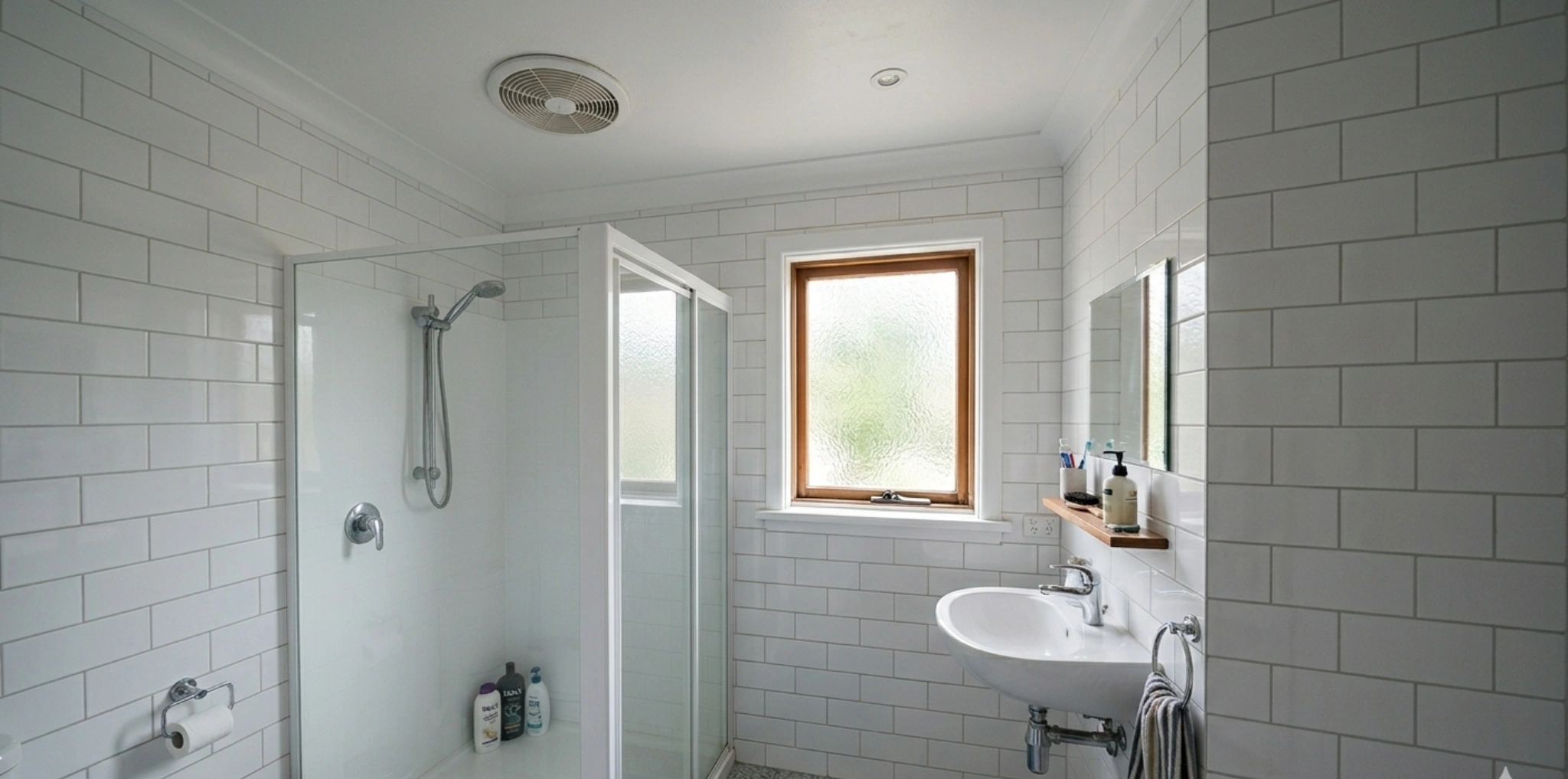
Ceiling fans should be placed close to the shower or bath but not directly above the water, where they can draw steam past light fittings or miss the corners of the room. In narrow bathrooms, a central location often works best so all surfaces benefit from airflow.
Duct Moist Air Outside, Not Into the Roof Space
One of the most damaging mistakes is venting bathroom air into the ceiling cavity or leaving the duct unconnected. This traps moisture above the room, where it can soak insulation, timbers and plasterboard.
To prevent this, the fan should be ducted all the way to an exterior grille, either through the roof, wall or eaves. The duct run should be:
- As short and straight as possible
- Smooth-walled or semi-rigid to limit airflow resistance
- Properly insulated in colder climates to reduce condensation inside the duct
All joints must be sealed so moist air cannot leak into the roof space. The external outlet should be weatherproof and positioned away from opening windows so damp air does not re-enter the home.
Use Smart Controls and Support Natural Airflow
Good hardware only works if it runs long enough to clear moisture. Experts often specify timer or humidity controls so the fan continues to operate after someone leaves the bathroom. A 15-30 minute run‑on period is usually enough for a standard shower.
Cross‑ventilation is also important. Even in bathrooms with strong mechanical ventilation, the design should allow for some natural airflow. This can include:
- A small window that can be opened after showers
- Adequate undercut on the bathroom door so air can enter as the fan exhausts it
- Louvred or high‑level vents in older homes where windows are limited
By combining correctly sized fans, direct ducting to the outside, smart controls and simple airflow planning, bathrooms stay drier, brighter and far less prone to mould over time.
Small ventilation details make a significant difference to how a bathroom performs over time. When extraction is undersized, poorly ducted or inconsistently used, moisture lingers and damage follows, including mould growth, peeling paint, swollen cabinetry and deterioration of hidden materials. When ventilation is properly designed and maintained, bathrooms dry quickly, finishes last longer and indoor air quality remains healthier.
In bathroom renovations in Canberra, ventilation should be treated as a core design element rather than an afterthought. Ensuring the fan is correctly sized, ducted outdoors, fitted with suitable controls and easy to maintain helps protect both the visible finishes and the hidden structure of the home. Addressing moisture management during the renovation stage is far more cost-effective than repairing preventable damage later.